
Want to know how to pack light for any trip? Want to know how to pack light with only a carry-on? Knowing how to pack light is the single best travel hack that saves you money, time, and stress on every trip.
Once you learn how to pack light, you realize most travelers pack twice as much as they actually need. They bring “just in case” outfits, multiple pairs of shoes, and enough toiletries to last six months. The result is heavy bags, sore shoulders, and extra fees that eat into their travel budget.
This guide shows you exactly how to fit everything you need into a single carry-on bag — whether you’re traveling for a weekend getaway or a month-long adventure across multiple countries.
Why Learning How to Pack Light Changes Everything
Packing light isn’t just about saving money on baggage fees (though that’s a nice bonus of $30-70 per flight). It fundamentally transforms how you travel.
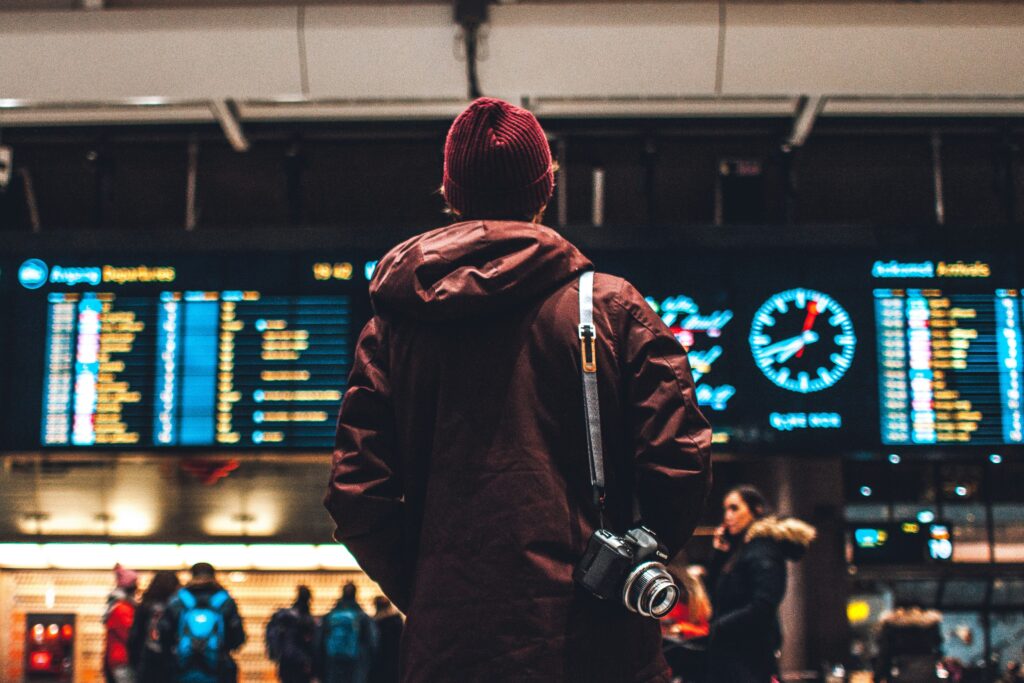
Speed through airports. No checking bags means you arrive later and leave faster. Skip the check-in counter, go straight to security, and walk past baggage claim when you land. On a typical trip, this saves 45-90 minutes each way.
Move freely between cities. Dragging a heavy suitcase through cobblestone streets, up subway stairs, and onto crowded buses is miserable. A light carry-on lets you walk comfortably from the train station to your hostel without breaking a sweat.
Never lose your luggage. Airlines lose or delay roughly 7 bags per 1,000 passengers. If your bag is with you in the cabin, this risk drops to zero.
Save money. Budget airlines like Ryanair, Wizz Air, and Spirit charge $30-70 for checked bags each way. On a round trip, that’s $60-140 saved. Over multiple flights, the savings are massive.
Travel spontaneously. With a light bag, you can change plans on a whim — jump on a last-minute flight, take an unexpected bus ride, or extend your trip without worrying about hauling heavy luggage.
How to Pack Light: Choosing the Right Carry-On Bag
Your bag choice matters more than your packing technique. The right bag maximizes space while meeting airline size restrictions.
Carry-On Size Limits
Most airlines allow carry-on bags up to 55 x 40 x 20 cm (22 x 16 x 8 inches). Budget airlines are stricter — Ryanair allows only 40 x 20 x 25 cm for the free personal item.
Important: Always check your specific airline’s size limits before you fly. Being forced to check a bag at the gate costs more than checking it in advance.
Best Bag Types for Light Packing
Travel backpack (40-45L) — Best for multi-destination trips. Brands like Osprey Farpoint 40, Tortuga Setout, and REI Trail 40 are designed specifically for carry-on travel. They open like a suitcase for easy packing, have comfortable straps for long walks, and include organizational pockets.
Carry-on suitcase (35-40L) — Best for single-destination trips. A small rolling suitcase works well for city trips where you’re staying in one place. The hard shell protects fragile items and the wheels save your shoulders.
Packable daypack — Essential addition. Bring a lightweight, foldable daypack (like the Matador Freerain) that packs down to the size of your fist. Use it as your daily bag at your destination while your main bag stays at the hotel.
The Capsule Wardrobe System
The capsule wardrobe is the secret to packing light. Instead of packing outfits, you pack individual pieces that all mix and match with each other.
The 5-4-3-2-1 Formula
This formula works for trips of any length:
5 tops: 3 t-shirts and 2 long-sleeve shirts (or button-downs). Choose neutral colors — black, gray, navy, white — that all work together. Merino wool tops are ideal because they resist odors, regulate temperature, and can be worn 3-4 times between washes.
4 bottoms: 2 pairs of pants and 2 pairs of shorts (or skirts). One pair of jeans or chinos for nicer occasions, one pair of travel pants for hiking and activities. Quick-dry material saves space because you can wash and dry them overnight.
3 layers: 1 lightweight rain jacket, 1 fleece or hoodie, 1 packable down jacket (for cold climates). Layering is more versatile than bringing heavy coats.
2 pairs of shoes: 1 comfortable walking shoe (worn on the plane to save space) and 1 pair of sandals or flip-flops. Shoes are the biggest space killers — never pack more than 2 pairs.
1 dressy item: 1 nice shirt, dress, or blazer for upscale restaurants or events. Choose something that doesn’t wrinkle easily.
Fabric Matters
Merino wool — The king of travel fabrics. Naturally odor-resistant, temperature-regulating, quick-drying, and wrinkle-resistant. Merino t-shirts can be worn 3-5 days without washing and still smell fresh.
Quick-dry synthetics — Nylon and polyester blends dry in 2-4 hours after hand washing. Perfect for travel pants and underwear.
Avoid cotton — Cotton absorbs moisture, takes forever to dry, wrinkles easily, and holds odors. It’s the worst fabric for travel.
Packing Techniques That Save Space
Rolling vs Folding vs Compression
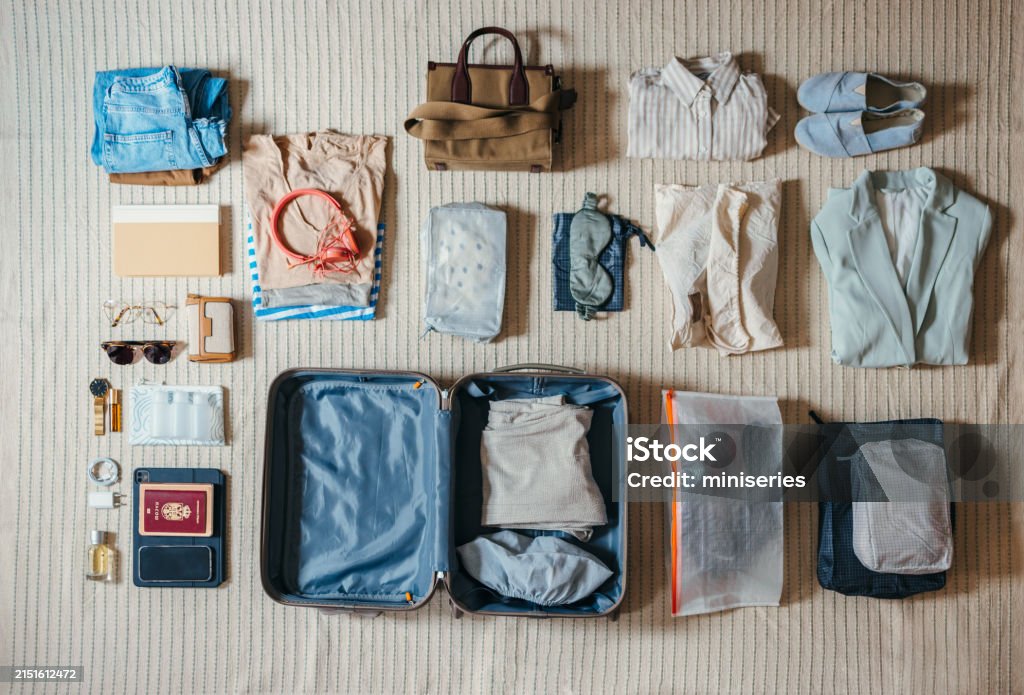
Rolling is the most space-efficient method for most clothing. Roll each item tightly from the bottom up. Rolled clothes also wrinkle less than folded clothes.
Compression packing cubes take rolling to the next level. Pack your rolled clothes into compression cubes, then zip the compression panel to squeeze out excess air. A set of 3-4 packing cubes can reduce your clothing volume by 30-40%.
Bundle wrapping works best for wrinkle-prone items like dress shirts and blazers. Wrap items around a central core (like your toiletry bag) to create a compact bundle with minimal folds.
The Layering Strategy
Pack your bag in layers for maximum organization:
Bottom layer: Heavy items like shoes, jeans, and your rain jacket. This keeps the weight centered and low.
Middle layer: Packing cubes with your rolled clothing. Fill gaps with socks and underwear.
Top layer: Items you need quick access to — toiletry bag, electronics, and a change of clothes for arrival.
Outside pockets: Passport, phone charger, headphones, snacks, and anything you need during the flight.
How to Pack Light: The Ultimate Carry-On Packing List
Clothing (in packing cubes)
3 t-shirts or tops (merino wool preferred). 2 long-sleeve shirts. 2 pairs of pants (1 jeans/chinos, 1 quick-dry travel pants). 2 pairs of shorts. 5-7 pairs of underwear (quick-dry). 3-4 pairs of socks (merino wool). 1 rain jacket (packable). 1 fleece or hoodie. 1 swimsuit. 1 sleepwear set (or use a t-shirt and shorts).
Toiletries (in a clear, quart-size bag)
Travel-size shampoo/conditioner (or solid shampoo bar — saves space and lasts longer). Travel-size body wash or soap bar. Toothbrush and small toothpaste. Deodorant (solid saves space). Sunscreen (essential). Small razor. Any medications. Lip balm.
Pro tip: Buy toiletries at your destination if you’re staying more than a week. Every pharmacy and supermarket in the world sells shampoo and toothpaste.
Electronics
Phone and charger. Universal power adapter (one adapter works worldwide). Portable power bank (10,000 mAh is enough). Earbuds or headphones. E-reader (saves bringing multiple books).
Documents and Money
Passport (and copies stored digitally). Travel credit cards (2 different networks — Visa and Mastercard). Small amount of local currency for arrival. Phone with digital copies of all important documents.
Optional but Useful
Reusable water bottle (collapsible saves space). Microfiber travel towel (hostels don’t always provide towels). Eye mask and earplugs (for flights and noisy hostels). Dry bag (for beach days and rain protection). Small padlock (for hostel lockers).
Laundry on the Road
The secret to packing light for long trips is doing laundry. You don’t need 14 outfits for a 14-day trip — you need 5 outfits and access to washing.
Hand washing: Bring a small packet of travel laundry soap (like Sea to Summit Pocket Laundry Wash). Wash clothes in the hotel sink, wring them out in a towel, and hang them to dry. Quick-dry fabrics are ready to wear in 2-4 hours.
Hostel laundry machines: Most hostels have washing machines for $2-5 per load. Wash everything once a week and you’re always fresh.
Laundromats: Available in every city worldwide. A wash-and-fold service costs $5-15 and you get clean, folded clothes back in a few hours.
Pro tip: Wash underwear and socks every night in the sink. They dry by morning if you use quick-dry materials. This means you only need 3-4 pairs instead of 14.
How to Pack Light: Mistakes to Avoid
1. Packing “just in case” items. If you might need it, you probably won’t. Unless it’s medication or a passport, leave “just in case” items at home.
2. Bringing too many shoes. Shoes are the heaviest, bulkiest items in any bag. Two pairs maximum — wear the heavier pair on the plane.
3. Packing full-size toiletries. A full bottle of shampoo weighs 350g and lasts months. A travel-size bottle weighs 50g and lasts 2-3 weeks. Buy more at your destination if needed.
4. Not wearing your heaviest clothes on the plane. Your heaviest jacket, boots, and jeans should be worn during transit, not packed. This saves enormous space and weight in your bag.
5. Over-packing electronics. You don’t need a laptop, tablet, e-reader, and phone. Pick 2 maximum. Your phone handles most tasks.
6. Forgetting to weigh your bag. Some airlines enforce weight limits of 7-10kg for carry-ons. Weigh your packed bag before leaving home to avoid surprises at the airport.
Final Thoughts on How to Pack Light
Learning how to pack light with only a carry-on is a skill that improves every trip you take. Start by using the 5-4-3-2-1 formula, invest in a good travel backpack and packing cubes, and choose quick-dry fabrics over cotton.
The first time you walk past the baggage carousel while everyone else waits, you’ll never go back to checking bags.
What’s your best packing tip? Share it in the comments!
Complete your travel preparation with our guides on Best Travel Backpacks, Airport Hacks, and Trip Planning on a Budget.
For gear reviews and packing inspiration, check out Nomadic Matt packing guide, REI expert travel packing advice, and OneBag.com for the original one-bag travel philosophy.