

Looking for proven strategies on how to find cheap accommodation for your next trip? Accommodation is typically the biggest travel expense after flights, eating up 40-60% of most travel budgets. But smart travelers know dozens of tricks to slash those costs without sleeping on park benches or compromising on safety.
This guide reveals 10 proven strategies to help you find cheap accommodation anywhere in the world in 2026. From booking platform hacks to alternative stays most travelers never consider, these tips can save you $20-50 per night on every trip.
Strategy 1: Master the Right Booking Platforms to Find Cheap Accommodation
Different platforms specialize in different accommodation types. Using the wrong platform means paying more than necessary.
Hostelworld is the best platform for hostel bookings. It has the largest selection with over 17,000 hostels in 179 countries, the most detailed review system (rated on security, location, staff, fun, cleanliness, and facilities), and powerful filters for amenities like free breakfast and kitchen access.
Booking.com is best for budget hotels and guesthouses. Use the “price low to high” filter combined with a minimum rating of 7.5+ and 50+ reviews. Join the free Genius loyalty program for automatic 10-15% discounts at participating properties. The “Free cancellation” filter lets you book risk-free.
Airbnb is best for apartments and longer stays. For trips of 4+ nights, apartments often beat hotel prices — especially when traveling as a couple or group. Filter by “weekly discount” and “monthly discount” for significant savings. Having a kitchen also cuts food costs by 40-60%.
Golden rule: Always compare the same property across all three platforms plus the property’s own website. The same room can be listed at different prices on different platforms. For detailed strategies on maximizing your hotel savings, The Points Guy’s hotel guide offers excellent advanced techniques.
Strategy 2: Use Hostels Strategically for Cheap Accommodation
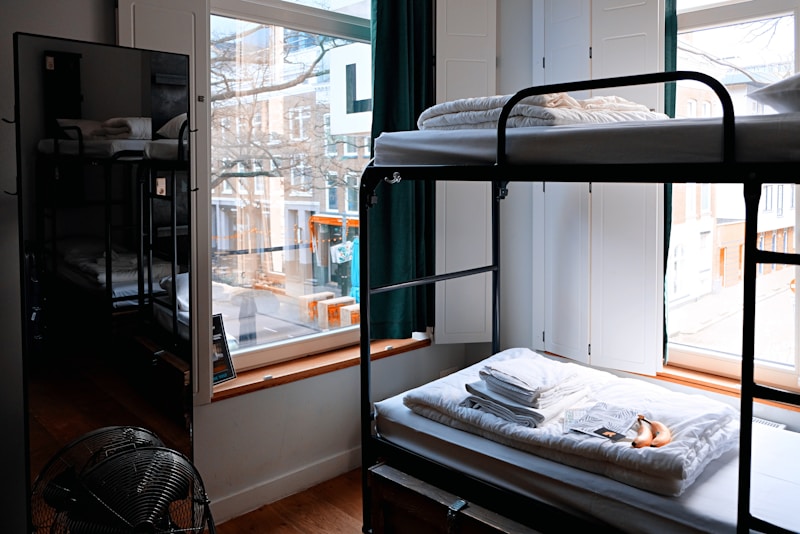
Modern hostels in 2026 have evolved far beyond the dirty backpacker stereotype. Many rival boutique hotels in design and comfort while costing a fraction of the price.
Dorm rooms ($8-25/night): The cheapest option. Choose 4-6 bed dorms over 8-12 bed rooms — the small price increase ($2-4 more) dramatically improves sleep quality. Female-only dorms are available at most hostels for women travelers who prefer them.
Private rooms ($25-60/night): Many hostels offer private rooms that cost less than budget hotels. You get privacy plus access to the hostel’s common areas, kitchen, social events, and travel community.
What to prioritize: Free breakfast saves $5-10 per day. Kitchen access lets you cook dinner for $3-5 instead of $15 at restaurants. Lockers keep valuables safe. Good WiFi is essential for digital nomads. Air conditioning is non-negotiable in tropical destinations.
Best hostel chains with consistent quality: Selina (stylish design hostels across Latin America and Europe), Generator (premium hostels in major European cities), St. Christopher’s (social hostels with onsite bars), and A&O (clean, reliable hostels across Germany and Austria).
Strategy 3: Try Couchsurfing for Free Accommodation
Couchsurfing connects travelers with local hosts who offer free accommodation — usually a couch, spare room, or air mattress. Beyond saving money, Couchsurfing provides authentic local experiences and friendships that hotel stays cannot match.
How to get accepted: Complete your profile 100% with photos and a detailed bio. Get verified through the platform (small fee but dramatically increases acceptance). Send personalized requests explaining why you want to visit their city — hosts ignore copy-paste messages. Offer something in return — cooking a meal from your home country is the classic move.
Safety tips: Read host reviews carefully and skip anyone with no reviews or negative feedback. Share your itinerary with someone at home. Meet in a public place first if possible. Trust your instincts — if anything feels wrong, politely leave.
Strategy 4: Discover House Sitting for Finding Cheap Accommodation
House sitting is one of the best-kept secrets for finding cheap accommodation — specifically, completely free accommodation in often beautiful homes. Homeowners need someone to watch their property and care for their pets while they travel. You get a free house or apartment in exchange.
Best platforms: TrustedHousesitters ($129/year, largest selection globally), MindMyHouse ($20/year, good for Australia and Europe), and Nomador ($89/year, strong in France and Europe).
How to stand out: Create a detailed profile with photos of you with animals. Get references from friends, neighbors, or previous house sits. Complete a video interview — homeowners want to see and hear you before trusting you with their home and pets. Start with short sits (2-3 days) to build reviews, then apply for longer ones.
Best for: Long-term travelers, digital nomads, retirees, and anyone with flexible schedules who loves animals.
Strategy 5: Book Last-Minute Deals for Cheap Accommodation
Hotels and hostels would rather sell rooms at a deep discount than leave them empty overnight. Last-minute booking takes advantage of this desperation.
HotelTonight: Specializes in same-day and next-day hotel bookings at 20-50% discounts. Best deals appear after noon for that night’s stay. The app curates quality properties so you avoid sketchy budget traps.
Booking.com “Tonight’s Deals”: Filter by deals and last-minute for discounted rooms across every price range.
When last-minute works: Weekdays in business cities (weekend travelers have left). Off-season in tourist destinations. When you are flexible about the specific property. Midweek arrivals (Sunday-Wednesday) generally find more availability.
When last-minute fails: Peak season holidays. Major events, festivals, and conferences. Popular destinations with limited accommodation like small islands.
Strategy 6: Negotiate Prices Directly
In many countries, especially Southeast Asia, Central America, Eastern Europe, and parts of Africa, you can negotiate accommodation prices directly with owners.
Walk-in discounts: Show up at a guesthouse without a booking and ask for their best rate. Property owners save the 15-20% commission they pay to online platforms, so they can offer you a lower direct price.
Long-stay discounts: Staying 3-7 nights? Ask for a weekly rate — expect 20-30% off the nightly price. Staying a month? Negotiate 40-60% off. Monthly rates in Southeast Asia can drop to $200-400 for a private room.
Cash payment discounts: Paying cash eliminates credit card processing fees for the owner. Ask if they offer a 5-10% cash discount — many do, especially family-run properties.
Strategy 7: Use Work Exchange Programs
Work a few hours per day in exchange for free accommodation and sometimes free meals. This is one of the most underrated strategies for finding cheap accommodation on long trips.
Worldpackers: The largest work exchange platform. Opportunities include hostel reception, social media management, photography, yoga instruction, bartending, and gardening. Work 15-25 hours per week in exchange for a free bed and often meals.
WWOOF (World Wide Opportunities on Organic Farms): Work on organic farms in exchange for room and board. Available in over 130 countries. Perfect for travelers who want rural, nature-focused experiences.
HelpX: Similar to Worldpackers but with more rural and farm-based opportunities. Typically 4 hours of work per day for free accommodation and meals.
For more strategies on how to find cheap accommodation through budget travel planning, read our complete guide on How to Travel Europe on $50 a Day.

Strategy 8: Travel During Shoulder Season
Accommodation prices swing dramatically with seasons. Timing your trip right is one of the easiest ways to find cheap accommodation.
Peak season: Highest prices, fully booked properties, limited options. Summer (June-August) in Europe, winter (December-February) in tropical destinations, holidays worldwide.
Shoulder season (BEST VALUE): 20-40% cheaper than peak with good weather and fewer crowds. May-June and September-October in Europe. March-May and October-November in Southeast Asia.
Off-season: 40-60% cheaper but weather may be unpredictable. November-March in Europe (except ski resorts). June-September in monsoon regions (though rain is usually brief afternoon showers).
Strategy 9: Sleep on Transport to Save on Accommodation
Combine transportation and accommodation by traveling overnight. Every night spent on a train, bus, or plane is one less night paying for a room.
European night trains: Couchettes cost $30-50 and save you both transport time and a hotel night. Routes like Paris-Barcelona, Vienna-Rome, and Amsterdam-Munich run overnight. Book early for the best prices.
Southeast Asian sleeper buses: Lie-flat seat buses between cities cost $10-20 and run overnight. Vietnam’s Hanoi-Hue route and Thailand’s Bangkok-Chiang Mai are popular overnight options.
Red-eye flights: Late-night flights save both travel time and one night of accommodation. Best for short-haul routes where you can sleep during the flight. Also see our guide on 15 Flight Hacks That Will Save You Hundreds for more booking savings.
Strategy 10: Use Hotel Loyalty Programs and Credit Card Points
Hotel loyalty programs and credit card points can provide completely free accommodation nights with zero out-of-pocket cost.
Hotel loyalty programs (free to join): Marriott Bonvoy, Hilton Honors, IHG Rewards, and World of Hyatt all offer free nights after accumulating points from paid stays. Even budget travelers should sign up — points add up over time and never expire (in most programs).
Credit card points: Travel credit cards earn points on everyday spending redeemable for hotel stays. The Chase Sapphire Preferred earns 60,000 points as a sign-up bonus — enough for 3-5 free hotel nights. Read our Best Travel Credit Cards guide for detailed comparisons.
Price matching: Most major hotel chains offer price matching. If you find a lower rate for the same room on a third-party site, the hotel will match it and sometimes offer additional discounts or points bonuses.
Final Thoughts on How to Find Cheap Accommodation
Finding cheap accommodation is a skill that improves with every trip. The strategies above can save you $20-50 per night — that is $140-350 per week and $600-1,500 per month for long-term travelers.
Start with Hostelworld and Booking.com for your first trips. As you gain confidence, explore Couchsurfing, house sitting, and work exchanges for free accommodation. Combine these strategies with shoulder season travel and last-minute deals for maximum savings.
Remember: the goal is not to find the cheapest possible bed, but the best value for your budget. A $12 hostel with excellent reviews beats a $5 hostel with terrible reviews every single time. Prioritize safety, cleanliness, and location over rock-bottom prices.
What is your favorite strategy for finding cheap accommodation? Share your best tip in the comments below!